EDUCATION
M.S. Fisheries and Wildlife Science (2003) University of Missouri Columbia, MO
B.S. Zoology (2000) University of Tennessee Knoxville, TN
PROFESSIONAL EXPERIENCE
Southern Blue Ridge Stewardship Director (02/2013 – Current)
The Nature Conservancy-North Carolina
Establish and direct The Nature Conservancy’s North Carolina Mountain Fire Management Program
- Direct prescribed fire operations on TNC preserves and support regional partner
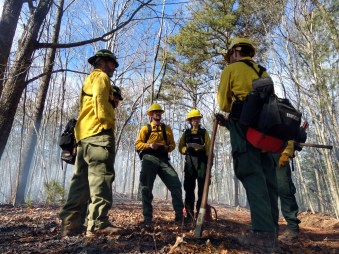 efforts in prescribed burning
 - Manage 20-person SBR Fire Crew
- Southern Blue Ridge Fire Learning Network (SBRFLN) Steering Team
- Co-lead the SBRFLN Central Escarpment Team
- Serve as TNC’s primary adviser to the US Forest Service Grandfather Collaborative Forest Landscape Restoration Initiative
Coordinate habitat restoration, monitoring, and management on TNC preserves across western North Carolina
- Create, implement, and update preserve management plans; develop and administer annual operating budget and associated work plans
- Direct monitoring programs for threatened and endangered species including bog turtles, green pitcher plants, mountain sweet pitcher plants; develop appropriate habitat restoration objectives; incorporate endangered, threatened, and rare species information into land management planning
- Coordinate habitat restoration projects including timber harvest, invasive species control, native ground cover restoration and re-vegetation, mechanical and chemical hardwood reduction, hydrologic restoration, prescribed burning, nest box installation, etc. to supplement current staffing; soliciting bids for projects, developing contracts, and providing technical guidance to contractors to ensure work conforms to design plan standards
- Procure resources to interagency cooperator areas for habitat restoration and public use improvement projects including wetland restoration, mechanical and chemical habitat management, supplemental planting, hunt camp maintenance, hydrologic restoration, and prescribed burning
- Develop habitat, vegetation, and project maps and geodatabases using ArcGIS 10.1 including the integration of field-collected GPS data into GIS and creation of shapefiles based on aerial images and reference data
- Hire and supervise Americorps members, interns, and seasonal employees: develop work plans; assign duties and completion dates; recommend personnel actions; assess product quality; evaluate performance; train employees on habitat restoration techniques; recommend recognition and awards; counsel and advise employees; review leave requests; and assure that subordinates are trained and fully comply with the provisions of the safety regulations
- Coordinate and conduct long-term restoration on region-wide southern Appalachian mountain bogs.
- Co-leading a Bog Learning Network Steering Committee and associated meeting
- Create and implement adaptive management, research, and monitoring at TNC-owned bogs and fens; sharing lessons learned, and managing all associated grants and reporting requirements
- Grant writing
- Supporting Philanthropic staff efforts to garner support
Supervisory Wildlife Biologist III 02/2004 – 02/2013
Florida Fish and Wildlife Conservation Commission
Tate’s Hell State Forest, Apalachicola National Forest, Wakulla State Forest
Coordinate wildlife and habitat restoration, monitoring, and management on Longleaf Pine-Wiregrass natural areas across 800,000 acres
- Establish and direct monitoring programs for threatened and endangered species including red-cockaded woodpeckers, flatwoods salamanders, gopher tortoise, and white-topped pitcher plants; develop appropriate habitat restoration objective
- Plan, prioritize, execute, and evaluate a 50,000 acre annual prescribed fire program (Tate’s Hell) and consult on a 100,000 acre annual fire program (Apalachicola WMA); serve as Crew Boss for teams that go inside burn blocks and protect endangered wildlife resources
- Propose, coordinate, and complete concurrent habitat restoration projects including native ground cover restoration and bank revegetation, mechanical and chemical hardwood reduction, hydrologic restoration, prescribed burning, nest box installation, etc. to supplement current staffing; soliciting bids for projects, developing contracts, and providing technical guidance to contractors to ensure work conforms to design plan standards
- Provide technical guidance to US Forest Service and Florida Forest Service by determining the impacts of resource management activities to listed terrestrial and aquatic species through scientific literature review, wildlife surveys, synthesis and provision of results, and making appropriate management recommendations
- Conduct investigations and inspect projects for compliance with policies, standards, guidelines, and plans to determine the impact of various land and water development projects on wildlife: review US Forest Service NEPA projects for Apalachicola National Forest; review Environmental Assessments, Biological Evaluations, and Environmental Impact Statements to ensure compliance with the approved plan for National Forests in Florida; apprise staff of potential resource management conflicts with Endangered Species Act and Clean Water Act and ensure activities are permissible according to US Fish and Wildlife Service guidelines; review regulations, legislation and statutes pertaining to candidate, threatened, and endangered fish, wildlife and plant resources.
- Request and allocate resources to interagency cooperator areas for habitat restoration and public use improvement projects including wetland restoration, mechanical and chemical habitat management, supplemental planting, hunt camp maintenance, hydrologic restoration, and prescribed burning
- Develop habitat, vegetation, and project maps and geodatabases using ArcGIS 9.3 and ArcView 3.2 including the integration of field-collected GPS data into GIS and creation of shapefiles based on aerial images and reference data
- Hire and supervise 1 Wildlife Biologist and 3 wildlife technicians: develop work plans; assign duties and completion dates; recommend personnel actions; assess product quality; evaluate performance; train employees on habitat restoration techniques; recommend recognition and awards; counsel and advise employees; review leave requests; and assure that subordinates are trained and fully comply with the provisions of the safety regulations
- Incorporate endangered, threatened, and rare species information into land planning
- Consult on timber stand improvements in cooperation with Florida Forest Service
- Oversee agency to response to human-bear conflicts in north Florida
- Direct the translocation of over 120 bears.
- Speak with residents about agency policies and means to reduce conflicts with bears
- Established education and outreach programs to help people and bears coexist
- Lectured before audiences of up to 200
- Established and helped coordinate the Forgotten Coast Bear Festiva
- Fostered cooperation between local government and waste service providers making Wakulla and Franklin the first and only Florida counties to offer bear-proof garbage cans
- Misc. Responsibilities and Achievements
- Co-authored Florida’s Black Bear Management Plan
- Developed and manage an electronic library for the Northwest Region’s Wildlife and Habitat Management Section to share scientific journal articles
- Determine the impact of various private land and water development projects on threatened and endangered species
- Drafted grant proposals and coordinated over 20 National Wild Turkey Federation superfund grants totaling over $100,000 to improve habitat by reducing understory vegetation and develop openings to enhance wildlife habitat
- Coordinate Chronic Wasting Disease and deer harvest data collection using established protocols
Wetland Research Assistant 01/2001 – 01/2004
Gaylord Memorial Laboratory-University of Missouri
- Served as member of an interdisciplinary team that provided technical advice to the US Fish and Wildlife Service regarding the management of National Wildlife Refuges throughout 20 states.
- The team visited refuges, met with the staff, evaluated resource management plans, and prepared recomendations based on the interrelationships among wetland structure and function and waterbird use
- Assisted in teaching waterfowl/wetland management workshops for wildlife biologists and managers primarily aimed at improving moist soil and bottomland hardwood management techniques.
- Designed and carried out research investigating relationships between swamp rabbit distribution and forest patch size and shape, hydroperiod, agroforestry, and fluvial hydrologic and geomorphic features
- Designed and carried out research investigating relationships between bat community composition and forest patch size and shape, hydroperiod, agroforestry and fluvial hydrologic and geomorphic features
- Used acoustic bat detectors to record and analyze bat calls and captured bats using mist nets.
- Spatially analyzed data using ArcGIS, entered into Excel, statisticaly analyzeda using SAS, SPSS, and Minitab
- Presented results at numerous conferences throughout North America
- Coordinated access to study sites by maintaining good relationships with private landowners.
- Provided advice to landowners on the implications of potential habitat restoration projects on their land
- Supervised 2 technicians for data collection and laboratory analyses
- Responsible for managing field data collection including vegetation measurement, plant identification, hydrologic measurements, data entry/database management, and vehicle maintenance
- Experience with aerial fixed-wing waterfowl surveys in southeastern Missouri
PUBLICATIONS
Warwick, J. A. and Craig A. Harper. 2018. Considerations for Fire and Wildlife in the Southern Blue Ridge. 27pp.
Warwick, J.A. 2014. Fire in Mountain Bogs in Proceedings, Wildland Fire in the Appalachians: Discussions among Managers and Scientists. Gen. Tech. Report. SRS-199. Asheville, NC: U.S. Department of Agriculture Forest Service, Southern Research Station. Pages 53-59.
Eason, T., Warwick, J. A., McCown, W., Abbot, M. 2011. Florida Black Bear Management Plan. Florida Fish and Wildlife Conservation Commission.
Warwick, J.A., M.E. Heitmeyer, and L.H. Fredrickson. 2001. Assessing the Distribution of Bats in Bottomland Hardwood Forests of Southeast Missouri. Program and Abstracts of the 31st Annual North American Symposium on Bat Research. Bat Research News 42(4):138.
 Warwick Woodland conservation